Episode 8 · Magic, Jinn, Romance, Palace
Aladdin and the Princess
Part 2 — winning her was only the beginning
The story
To marry the Sultan's daughter, a street boy with a jinn at his command must out-dazzle a whole court and prove his heart — never seeing that the sorcerer he buried has come back for the lamp, and that a child's hand is about to give it away.
Aladdin has everything the lamp can conjure and the one thing it cannot: the heart of Princess Bodour. Wanting a Sultan's daughter means taking on the whole court — a vain Sultan dazzled by spectacle, and a jealous Grand Vizier who wants the girl for his own son and forces a rival wedding to block the upstart.
Aladdin answers with wonders. A living parade floods the city; a palace of sand and starlight rises overnight; the village children he once starved beside pour in to haul beside him and call his name. But Bodour will not be won by spectacle. She tests the suitor in secret, hiding who she is, and chooses him for his heart — not his gold.
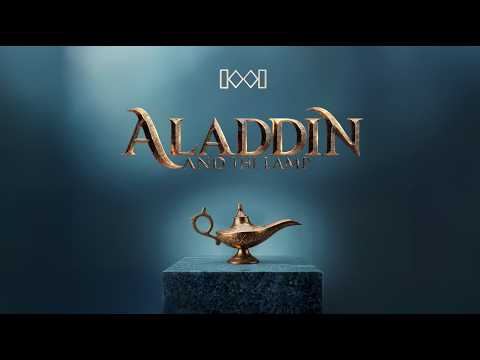
In the shadows, the sorcerer Aladdin left for dead has returned, patient and grown stronger, waiting for the boy to ride out. In a peddler's cloak he calls the oldest trick in the tale through the streets — "new lamps for old." And Bodour's little sister Aya, who loves anything that shines, thinks nothing of the trade.
The lamp grows warm in her small hands as she waves the peddler goodbye. The final frame belongs to the Maghrebi, walking into the night with the lamp, his power visibly greater, a low laugh trailing behind him.
Key moments
- Bodour adorned for a wedding she never agreed to — and her fear that her suitor's heart is not pure
- Aladdin's mother carries a bowl of cave-jewels into the throne room
- The Vizier stalls the match and forces a rival groom
- The jinn torments the Vizier's son — found somewhere worse each dawn
- The living parade, and the rope that slips — the village children haul beside Aladdin
- The secret test: Bodour chooses him for his heart, not his gold
- A palace of sand and starlight rises overnight, one window left unfinished
- 'New lamps for old' — Aya trades the old lamp away, and it grows warm in her hands
Characters
- Aladdin · Street boy, master of the jinn
- Princess Bodour · The Sultan's daughter
- Aya · Bodour's little sister
- The Sultan · Bodour's father, ruler of the kingdom
- The Grand Vizier · The Sultan's minister
- The Vizier's Son · The rival groom
- The Maghrebi · The sorcerer from the Maghreb
- Rohaan · The spirit of the lamp
- Aladdin's Mother · Aladdin's mother
- Ghazal · Aya's tame gazelle
The tale behind the episode
Aladdin is one of the "orphan tales" of the Nights: it has no medieval Arabic manuscript and was first written down in French by Antoine Galland in 1712, from the telling of the Syrian storyteller Hanna Diyab of Aleppo. The 1001 trilogy returns to that older shape, with a sorcerer from the Maghreb, two spirits (of the ring and of the lamp), the trick of "new lamps for old" and a villain who comes back in disguise.
Read more: Aladdin: The Orphan Tale That Became the Most Famous Night and Jinn in Arab folklore.